

(Washington, DC) - Armed groups fighting over parts of the Catatumbo region near the Colombia-Venezuela border have committed grave abuses against people living in the area and displaced thousands, Human Rights Watch said today.
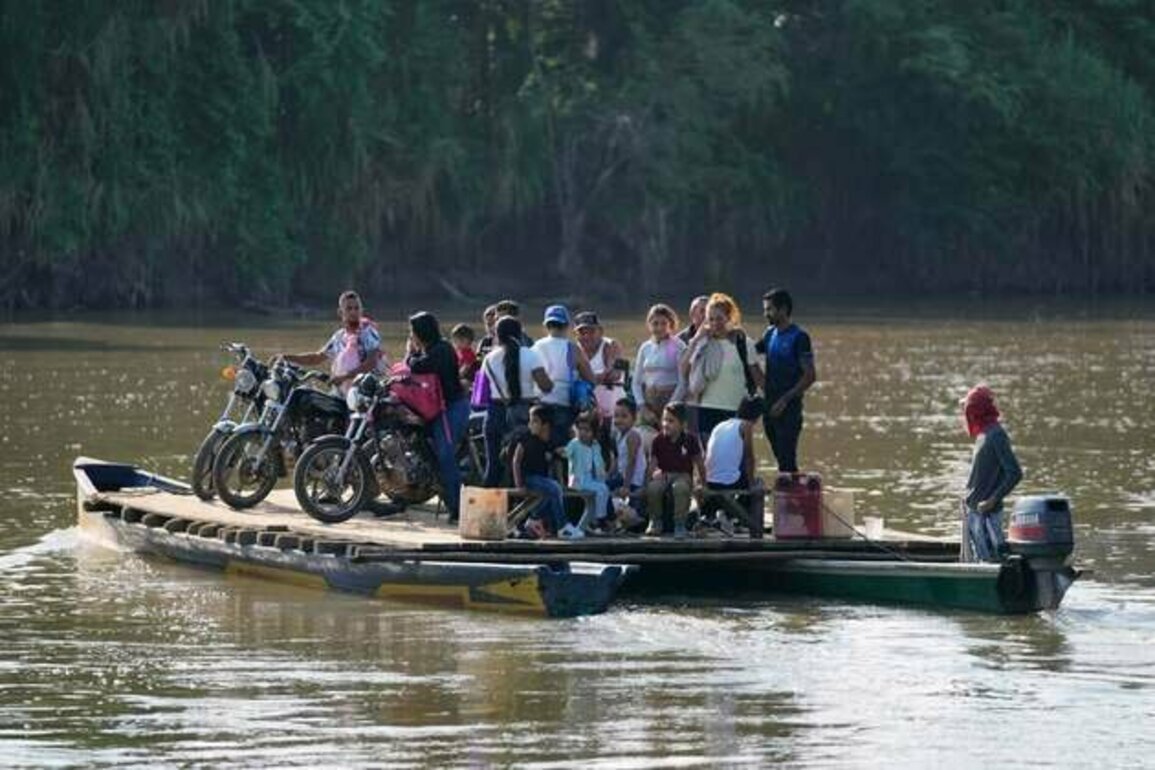
Since January 16, 2025, the National Liberation Army (ELN) has been carrying out a campaign to regain control of large parts of the Catatumbo region, in North Santander state. They have killed, assaulted, kidnapped, and disappeared civilians whom they accuse of having ties with the 33rd Front, a group that emerged from the 2017 demobilization of the Revolutionary Armed Forces of Colombia (FARC). Fighting and abuses by both sides have reportedly forced over 56,000 people to flee their homes, one of the largest mass displacements in Colombia in decades.
"Our research points to widespread abuses against ordinary people by the ELN as it fights to regain control over Catatumbo," said Juanita Goebertus, Americas director at Human Rights Watch. "The people we interviewed also detailed grave abuses by the 33rd Front, including recruiting children and forced labor, with no protection by state authorities."
Between January and February 2025, Human Rights Watch interviewed more than 65 people, including displaced people in Ccuta, in North Santander, aid workers, and judicial and government authorities. Human Rights Watch also interviewed people in Catatumbo by phone, and judicial authorities and other experts in Bogota. Most who experienced or witnessed abuses feared reprisals and spoke on condition of anonymity.
Human Rights Watch also reviewed publications by the Human Rights Ombudsperson's Office, a national government agency charged with overseeing rights protection, and the United Nations Office for the Coordination of Humanitarian Affairs (OCHA), and reviewed and verified photographs and videos to document cases of abuse. Researchers sent information requests to national authorities but only received a response from the Colombian Family Welfare Institute (ICBF).
Catatumbo is a strategic location for drug production and trafficking. The ELN has for years benefited from the complicity of Venezuelan security forces.
The ELN and the 33rd Front had shared control over large parts of the Catatumbo territory since 2018, in what experts and government officials called an "armed coexistence agreement." On the morning of January 16, ELN fighters carried out largely simultaneous killings in townships in five Catatumbo municipalities: Teorama, Convencion, Hacari, Tib, and El Tarra. Those targeted included leaders, members of the Association for Peasant Unity of Catatumbo (Asociacion de Unidad Campesina del Catatumbo, ASUNCAT), and former FARC fighters demobilized under the 2016 peace accord with the government, among others.
ELN fighters then searched homes and workplaces looking for people they accuse of having links with the 33rd Front. Witnesses said ELN members killed some of these people and took others away. Some were reported dead days later. The families of others do not know what happened to them.
Displaced people told Human Rights Watch that in recent years, the 33rd Front had expanded its control over people and communities in Catatumbo, imposing rules on the population through threats, killings, and forced labor as punishment. Interviewees also alleged forced recruitment, including of children.
The Colombian government had been conducting peace talks with the ELN since August 2022, and with the 33rd Front - part of a coalition of FARC dissident groups known as the "Joint Commands of Blocs and the Front" - since October 2023. As part of negotiations with the 33rd Front, the government agreed to a ceasefire and announced local development plans that the Front, the government, and local communities would carry out, even as the fighters remain in arms.
Interviewees said that civilians who helped plan these local development plans were at high risk of ELN attacks. North Santander authorities indicate that 78 people, including 4 children, were killed in Catatumbo between January 16 and March 8. The figure is more than four times the monthly average in 2024, and the true figure is probably higher since armed groups "disappeared" some people, and family members buried bodies without notifying authorities.
On January 20, the Colombian government suspended peace talks with the ELN. It continues to negotiate a peace process with the 33rd Front.
On January 24, the Colombian government declared a "state of emergency" in the Catatumbo region. The military used helicopters to evacuate over 750 people at risk of ELN violence. The government also announced several local development and security measures, including a program to give money to individual farmers who promise to replace their coca crops with food and other legal sources of income.
"The government needs to urgently put in place a justice and security policy to protect the population and re-establish the rule of law in Catatumbo," Goebertus said. "The government should also make sure that its coca replacement program helps farmers integrate into legal economies and does not create perverse incentives that could lead to more violence in the future."
Killings, Disappearances, and Kidnappings
Human Rights Watch received credible allegations of multiple killings of civilians in Catatumbo by members of both the ELN and the 33rd Front. In most cases, the armed groups sought out the victims at their home or workplace.
Fighters often killed people on roads and prohibited families and others from removing their bodies.
That same afternoon, five men in civilian clothes and ELN armbands arrived at the victim's farm. "They told me to leave and that I could come back later, [but under] certain rules," his wife said. She left the village with two her children, aged 9 years and 10 months.
Authorities have also reported that on March 3 the ELN released 22 people, including 3 children, whom they had held hostage since the week of January 16. The total number of hostages is likely much higher. Human Rights Watch interviewed relatives of people who are missing but have not reported the cases, fearing retaliation.
In some cases, the ELN told people, including relatives of people they were seeking, that they were not allowed to leave their farms or communities. "My mom says they ask about me and don't let her leave the town; it's a way to pressure me into returning," a community leader said.
Child Recruitment; Risks for Schools
Armed groups have recruited children for years in Catatumbo. In November 2024, the Human Rights Ombudsperson's Office reported that child recruitment in Catatumbo "was increasing" in what they described as part of a "strategy to strengthen [the group] and expand their territory."
Several people said they fled out of fear that the ELN or the 33rd Front would forcibly recruit their teenage children. A displaced woman from El Tarra municipality said: "We left because I was very afraid that they would take them away. I am the only woman in a family of all young and strong men, at any moment they would take them."
Between January 1 and February 19, Colombian authorities recovered 44 children, most of them held by the 33rd Front. This is likely a fraction of the total number held by armed groups. According to the ICBF, these include children born in several parts of Colombia, as well at least four from Venezuela.
Human Rights Watch documented the case of a 12-year-old boy in Tib who was taken by people his family believed to be ELN members. A relative said that a man had offered the boy to work in coca cultivation and tried to take him away, but the boy's mother stopped him. Days later, the man returned - in plain clothes - and the boy agreed to leave with him. Weeks later, the ELN returned the boy, the family member said, on the condition that he leave the municipality.
More than 46,900 children in Catatumbo municipalities were unable to attend school for weeks after the start of the conflict, placing them at heightened risk of recruitment. Hundreds of teachers have also fled Catatumbo. "At a time of confrontation, [armed groups] continue to fire at each other and do not respect the schools or anything else," a displaced teacher said.
Mass Displacement
The fighting and abuses on the border triggered what the Human Rights Ombudsperson's Office described as the largest incident of forced displacement since authorities began recording displacements in 1997.
More than 56,500 people, over 14 percent of the region's population, have been forcibly displaced, according to North Santander authorities, more than were forcefully displaced due to violence across all of Colombia in all of 2024, according to OCHA. Catatumbo is home to only 0.7 percent of Colombia's population, but accounts for 93 percent of all forced displacement so far in 2025.
The largest numbers went to Ccuta (20,300 people) and to Ocana (12,097 people), a city in Catatumbo.
While most fled for fear of being targeted or caught in the crossfire, many had been threatened by ELN or 33rd Front members. Some said that following their displacement, people in their communities had told them that the ELN had destroyed their property or taken over their homes. "A neighbor called me to tell me that the ELN threw a grenade at the house where I lived, and they took my motorcycle and everything from the house," a community leader who is member of the Association for Peasant Unity in Catatumbo (ASUNCAT) said.
"They looted our farm, took motorcycles, machinery, and all the equipment we had for the crops. The neighbors say that no one can approach the property, and anyone who does is declared a military target," a displaced farmer said.
Social Control and Abuse
Both armed groups have exploited the lack of any strong state presence to establish social control in Catatumbo.
Interviewees said that the 33rd Front used the ceasefire and the announcement of joint local development plans, to expand its control over communities. Many said that the 33rd Front ran what they describe as "resocialization camps," where people they consider to have broken their rules - for example, by consuming drugs or supporting the military - are required to perform forced labor.
One 35-year-old man said that, on December 8, 2024, members of the 33rd Front took him from his house and drove him to what they described as a "resocialization camp." He said he was taken there to be "investigated" for posting a video of a Colombian Army helicopter on WhatsApp, which 33rd Front members said was evidence that he cooperated with the military.
He said that he and 27 others were forced to work cutting sugarcane every day from 4 a.m. to 6:30 p.m. "One time, a [33rd Front] fighter killed a couple who was arguing ... They killed them in front of everyone and made us bury them," he said.
He also described sexual violence by commanders against women and girls there. "The 'favorite ones' had certain 'luxuries,' like sleeping in a bed," he said. Government officials told Human Rights Watch that they had received similar reports.
People in Catatumbo suffer high levels of poverty - 3.4 times the national average - and poor infrastructure, including limited access to roads, schools, and hospitals. The 33rd Front has paid to repair bridges, medical centers, and schools, and handed out Christmas presents to children at times to gain influence with or control over local organizations. Such projects have often been conducted jointly with local Community Action Boards, placing civilians at higher risk of retaliation by other armed groups.
The armed groups also summon community leaders and others to meetings where they announce rules for their communities. One community leader from Tib said that "all leaders must attend the meetings; otherwise, [we receive] death threats."
On January 17, armed men killed Pedro Maria Ropero, a leader in the Campo Seis township in Tib. A witness said that Ropero had opposed the creation of a new Community Action Board in his township led by people linked to the 33rd Front.
Government Response
In November, the Human Rights Ombudsperson's Office warned of "tensions" between the ELN and the 33rd Front, and said that there was a "probability" of fighting between the two groups, which could cause a "crisis" with "high humanitarian costs." Local authorities and members of human rights and humanitarian organizations told Human Rights Watch even months earlier that there were indications that such fighting could break out. These included heightened restrictions by the armed groups, increased checkpoints, and movement of ELN forces from other parts of the country into Catatumbo.
Since President Gustavo Petro took office in August 2022, his administration has sought negotiations with armed and organized crime groups in the country.
In 2022, the government began negotiations with the ELN but suspended them in February 2025 following the surge in violence in Catatumbo.
In October 2023, the government began negotiations with the 33rd Front, as part of a coalition of FARC dissident groups then known as "Central General Staff." The group split in March 2024, and only a part of it - the "Joint Commands of Blocks and the Front," including the 33rd Front - has continued negotiations. The government and the Joint Commands agreed to a ceasefire, from mid-July 2024 to mid-April 2025. The 33rd Front used the ceasefire to recruit members and expand its social control over communities, human rights groups and humanitarian workers said.
The government and the Joint Commands also agreed to local development projects that would be implemented by local Community Action Boards as the negotiations continued. Documents related to the peace talks reviewed by Human Rights Watch say these included establishing rice cultivation fields and protecting wetlands. A local authority said that the ELN was "upset" with the development projects. Some civilians who helped plan these projects were forced to flee because of the violence in January, a government official working on peace negotiations with the 33rd Front said.
Humanitarian Response
Under Colombia's Victims Law, municipal governments must provide victims of conflict-related abuses - including forced displacement -with immediate humanitarian assistance, including food, temporary housing, and emergency transportation. Whenever municipal or state authorities are unable to cope, the national government is required to provide assistance.
The Ccuta and Ocana local governments, as well as the North Santander government, have taken steps to assist displaced people thanks, in large part, to support by humanitarian groups. Ocana opened shelters for 1,700 people, Ccuta provided some food, covered lodging costs for displaced people in hotels, and set up a shelter with police surveillance for some people at heightened risk, and North Santander established a school for displaced children.
However, many displaced people said they feared ELN retaliation in the hotels and in the local football stadium, where people pick up food packages. The Human Rights Ombudsperson's Office has reported the presence of ELN fighters in Ccuta and, according to humanitarian workers, hotels have checked-in people other than those displaced.
Many displaced people, both in hotels and acquaintances homes, described overcrowded conditions. Humanitarian workers said that these conditions exposed women and girls to gender-based violence and sexual harassment and abuse by their relatives and other displaced people.
Humanitarian workers and local government officials also said that many displaced people have suffered severe psychological impacts and that some even tried to commit suicide. Because of these conditions, some displaced people said they were considering returning to Catatumbo, despite the dire risks. "It is scary to return because you don't know why they are looking for you, or for what reason," said a displaced woman who left her home in Tib with her 3-year-old child.
Some of the limitations in the humanitarian response appear to stem from government failure to adequately plan for a crisis of this magnitude. Ccuta had a contingency plan, but it only contemplated 1,000 displaced people.
Local Development and Coca Replacement Plans
Authorities have taken slow steps to address the long-standing lack of state presence and access to basic services in Catatumbo.
In eight Catatumbo municipalities, the national government promised a 10-year "Territorial Development Program" (PDET) under the 2016 peace agreement with the FARC. Eight years later, the government has appropriated funds for roughly a third of the initial investment announced for Catatumbo.
President Petro's administration has announced a new series of development projects, under what it calls the Catatumbo Social Pact. Since the crisis broke out in January, the government has announced projects with more than US$640 million in funding. This spending, however, is pending a Constitutional Court review on the constitutionality of the "state of emergency."
The government's Rural Development Agency has bought food harvested by local farmers and used it as humanitarian aid for displaced people. Additionally, on February 13, the government announced that, in an effort to undermine drug production in Catatumbo, it would provide money and assistance to develop such crops as coffee or cacao, to individual farmers who committed to replace their coca crops with food and other legal sources of income.
Multiple studies of the crop substitution program, the most recent such nationwide initiative, have shown that in the absence of institutional coordination and broader plans to help people obtain better access to food markets, the program actually has created incentives in some cases for people to produce more coca crops - to later receive payments for replacing the crops - and may even trigger more violence.
Recommendations
To the government of President Gustavo Petro:
To the Attorney General's Office:
To donor governments and international humanitarian agencies:
Source: Human Rights Watch